---
title: "Business break-in prevention: 5 tips | Spyke Box"
description: From lighting and camera placement to smart detection and subscription monitoring, here are 5 tips to prevent break-ins and protect your business.
image: https://spyke.nl/hubfs/Brand%20Imagery/Blog%20Feature%20Imagery/Blog%20Feature%20-%20Business%20break-in%20prevention.jpg
---
# Business break-in prevention: 5 tips for a more secure premises
Jun 30, 2026 2:11:48 PM
As a business owner, you probably already have some security in place. A decent lock. Outdoor lighting. Maybe a camera or two near the entrance.
It’s a good first layer, but it doesn’t cover every risk.
The frustrating thing about most break-ins is that the signs were there all along: A car that circled the block a few times, someone checking the back door, or activity that looked slightly off but not serious enough for anyone to act on.
Nearly [40% of business owners](https://www.interpolis.nl/zakelijk/inbraak-en-diefstal/inbraak) in the Netherlands will experience a break-in at some point. These five tips help you reduce that risk step by step.
## 5 tips to prevent break-ins and protect your business
### Tip 1: Make sure your premises are well lit
Good lighting is one of the simplest ways to make your premises less attractive to opportunistic intruders. A dark entrance, hidden side passage, or poorly lit loading bay gives someone more cover than they should have.
Motion-activated lights around entrances, car parks, storage areas and side routes can make a big difference without much day-to-day effort from you. They also help your cameras capture clearer footage, especially in those easy-to-overlook areas.
The front of the building is usually the obvious place to start, but don’t forget about the back door, gaps between buildings, the yard, and staff entrances. These are often the places a business checks last, and an intruder checks first.
**Places intruders often look for cover:**
- Entrances and exits
- Loading bays and yards
- Car parks and side passages
- Dark corners near fences, doors, or storage areas
### Tip 2: Position your cameras strategically
The same rule applies to cameras as lighting: don’t *just* consider the front entrance and call it. It won’t show what’s happening around the side, near the back door, or in the car park after closing time.
Look at your premises the way someone else might.
**Ask yourself: **
- Where could a person stand without being noticed?
- Which entrance is used least during the day?
- Where is stock, equipment, or company property easiest to reach?
A well-positioned camera does two things: It records what happens if something goes wrong, and it makes your premises less appealing to someone checking the place out in advance.
**Where cameras often matter most:**
- Areas your lighting has already exposed as weak spots
- Entrances away from the main street
- Car parks, yards, and loading areas
- Stockrooms or equipment storage areas
### Tip 3: Add smart detection technology to your security setup
A camera can show you what happened. Smart detection, as offered by [Spyke Box](https://spyke.nl/product?hsLang=en), flags suspicious activity and a control center connection means someone can check what's happening and step in when needed, during the hours you set, while there's still time to do something about it.
That distinction matters more than it might seem. A break-in doesn’t usually stop at the broken lock or missing stock. Once you factor in repairs, insurance paperwork, lost time, and the general disruption of getting the business back to normal, the hidden costs are often [three to five times higher](https://flexteam.nl/nieuws/wat-is-de-werkelijke-schade-van-een-bedrijfsinbraak-buiten-de-directe-kosten-om/) than the direct damage.
The human element makes this system work. Every alert is checked by a certified operator before any action is taken. They review the footage, assess the situation, and decide on the right response, whether that's contacting the relevant person, dispatching security, or calling the police. That keeps false alarms to a minimum.
**What smart detection technology adds:**
- Flags suspicious activity automatically, identifying people, vehicles, or unusual patterns in zones that should be empty at that time
- Every alert is reviewed by a certified operator before any action is taken
- Real-time response during the hours you configure
- Peace of mind that the right people are on it, even when you're not
### Tip 4: Pay attention to patterns, not just incidents
Most security thinking focuses on responding to incidents. But the more useful question to ask is: *what happened in the days or hours before?*
One unfamiliar car passing by probably means nothing. The same vehicle returning three evenings in a row is a different story. So is someone spending a little too long near a side door, loitering near the car park after closing, or checking an entrance that is usually quiet.
A connected system helps you spot those patterns while there’s still time.
**Why patterns are worth noticing:**
- Intruders often look around before deciding where and when to act
- Repeated activity can give you time to respond before anything happens
- Small signals become more important when they happen more than once
- Smart detection can flag patterns that would otherwise go unnoticed
### Tip 5: Choose a subscription model instead of one-off hardware
Buying a security system outright can feel like the practical choice. You pay once, install the equipment, and tick it off the list.
But hardware gets older, software needs updating, and maintenance costs quickly become more frequent because something stops working properly.
A subscription model like Spyke Box keeps things simpler. Instead of a large upfront investment and a system you have to manage yourself, you pay a fixed monthly amount that covers all your smart detection needs: hardware, two cameras, installation, control center connection, software, app, updates, support, and replacement hardware.
The damage from a single break-in[can run up to €100,000](https://www.interpolis.nl/zakelijk/magazine/locatie/voorkom-inbraak-op-een-bedrijventerrein) - against that number, a predictable monthly cost starts to look less like an expense and more like straightforward risk management.
**What a subscription model gives you:**
- Predictable monthly costs with no surprise bills
- Hardware, cameras, installation, and ongoing support included
- Meets insurer requirements for certified business security
- A lower barrier to getting started with professional-grade security
#### FAQ: Business break-in prevention
##### What is the difference between a camera system and smart detection?
A camera system records what happens. Smart detection and a control center connection add the next step: they help spot suspicious activity during the hours you choose and make sure someone checks it. If something looks wrong, the system flags it, a certified operator reviews the situation, and the agreed response is followed. The footage is still available if you need it, but it’s no longer the only thing your security relies on.
##### How does smart detection decide that something is suspicious?
Smart detection filters the activity first. It detects movement, identifies whether it’s a person, animal, car, or truck, and checks whether that activity is happening in the wrong place at the wrong time. A certified control center operator then reviews the footage before any action is taken. That way, false alarms are kept to a minimum and the response is based on what is actually happening.
##### Why do patterns matter more than single incidents?
Most break-ins don’t happen out of nowhere. Someone may have already checked the premises, tested an entrance, or watched when the area gets quiet. A single unfamiliar vehicle or one person hanging around may not mean much on its own, but repeated activity is worth paying attention to. A connected system can help spot those patterns before they turn into a real problem.
---
## The takeaway
Good security doesn’t happen all at once.
Most businesses don't need to overhaul everything overnight. These five tips are designed to be built on gradually, starting with the basics you may already have in place and then adding the measures that make the biggest practical difference for your premises.
In our experience, the most important shift is moving from recording what happened to responding while something is still happening - or even better, before it happens. Better lighting, smarter camera placement, and pattern awareness all support that goal by making suspicious activity easier to spot and act on.
Spyke Box is designed to be that final layer: smart detection and a professional control center, covering your premises during the hours you set.
*Want to know where you're most exposed? Request a free security check today.
*
**
* [ ](https://spyke.nl/hs/cta/wi/redirect?encryptedPayload=AVxigLKz%2BR3HInQCO6252%2BYMkNEEsvAJfLhMpU8EK3NiYefusMflx%2BBUM3X7VYFgaNkWWbB9J7qabKhxjteg%2Fe9IS6qpZZR4b7zwABiizxtEdR5%2B3WPNZ82KhqlAIV7wE5nl6vdEysfuSkrV3LYOJ4FUlgYudOeJfZUUCcwdqftSqw%3D%3D&webInteractiveContentId=429401422068&portalId=148522598&hsLang=en) *
* *
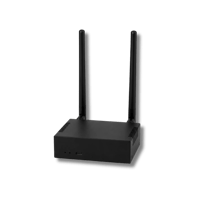
## Want to know what Spyke Box could look like for your business?
Tell us about your location and security setup. We’ll help you understand the best next step
[Get in touch](https://spyke.nl/en/contact?hsLang=en)

[ ](https://spyke.nl/hubfs/Documents/2025-09-10-certificate_VdS-3137_AES-125006_EN.pdf?hsLang=en)
```json
{
"@context" : "https://schema.org",
"@type" : "BlogPosting",
"author" : {
"@type" : "Person",
"name" : "Spyke",
"url" : "https://spyke.nl/en/blog/author/spyke"
},
"dateModified" : "2026-06-30T12:11:48.325Z",
"datePublished" : "2026-06-30T12:11:48.000Z",
"headline" : "Business break-in prevention: 5 tips | Spyke Box",
"image" : [ "https://spyke.nl/hubfs/Brand%20Imagery/Blog%20Feature%20Imagery/Blog%20Feature%20-%20Business%20break-in%20prevention.jpg" ],
"mainEntityOfPage" : {
"@id" : "https://spyke.nl/en/blog/business-break-in-prevention-5-tips",
"@type" : "WebPage"
},
"publisher" : {
"@type" : "Organization",
"logo" : {
"@type" : "ImageObject",
"url" : "https://spyke.nl/hubfs/Logo/Main%20Logo/Spyke%20Box%20Logo%20COLOR.svg"
},
"name" : "Spyke"
}
}
```